


Making Tax Digital for Landlords: Your Complete Guide for 2026

Making Tax Digital for Landlords: Your Complete Guide for 2026

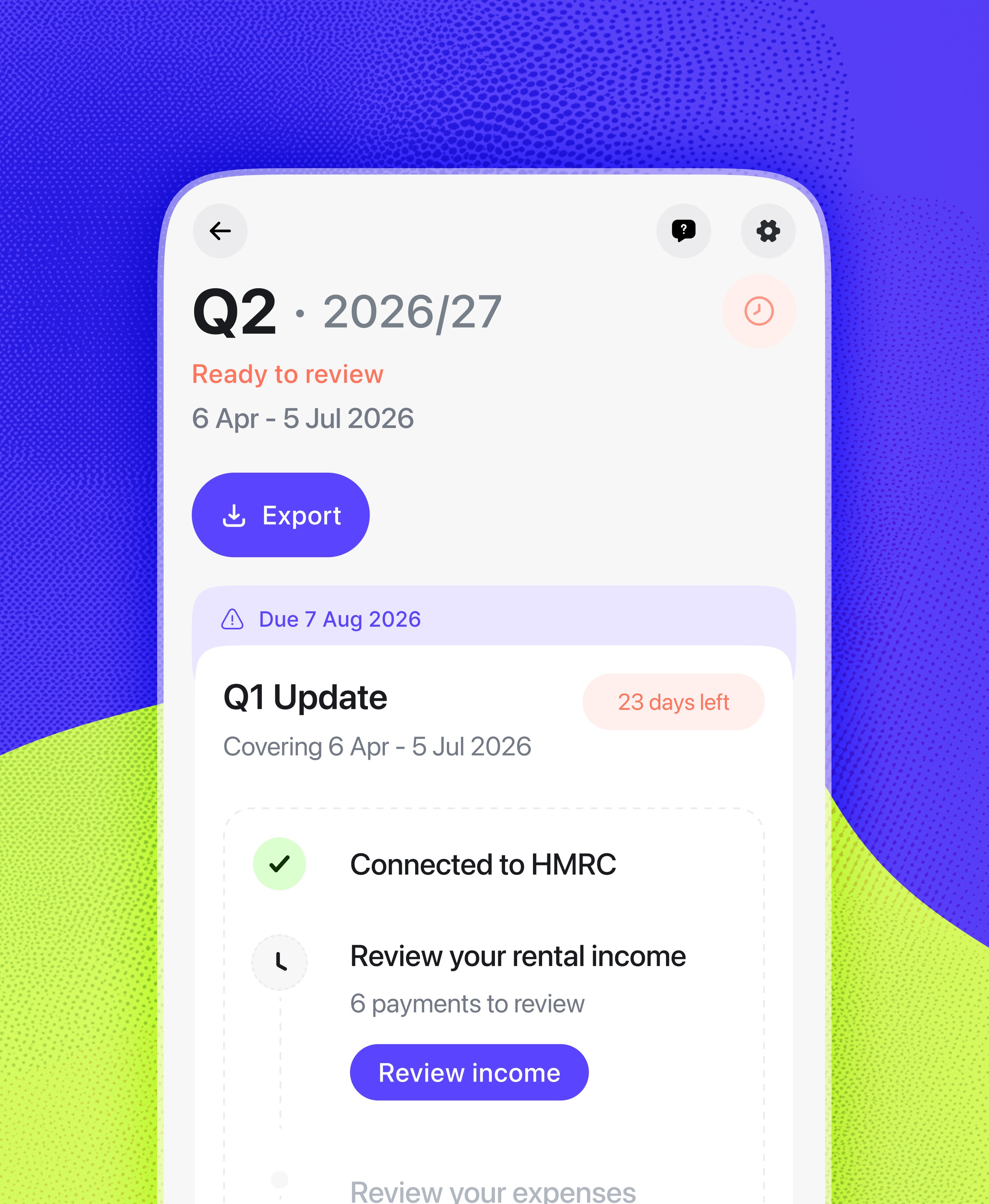
Making Tax Digital for Income Tax has applied to UK landlords since 6 April 2026. If your qualifying income, meaning gross rental and self-employment income combined, exceeded £50,000 in 2024–25, you must keep digital records and send HMRC four quarterly updates a year through MTD-compatible software, followed by a Final Declaration at year end. The first update was due on 7 August 2026 and the next falls on 7 November. This guide covers the deadlines, the thresholds, the penalty position in the first year, who is exempt, and what to do if you have not filed yet.

Now live

Making Tax Digital
Making Tax Digital
for Landlords
for Landlords

HMRC is changing how UK landlords report rental income. Instead of one annual tax return, you'll send short quarterly updates and keep digital records year-round. This guide explains how to get ready and what to do next.

What Is Making Tax Digital for Income Tax?

What Is Making Tax Digital for Income Tax?

What Is Making Tax Digital for Income Tax?

The basics

What is Making Tax Digital?

Making Tax Digital (MTD) is the biggest change to Self Assessment since it was introduced for the 1996–97 tax year. HMRC is moving the UK tax system online, and landlords are now in scope. In practice it means that instead of filing one tax return each January, you keep digital records of your rental income and expenses through the year and send HMRC a summary every three months using compatible software.

Making Tax Digital (MTD) is the biggest change to Self Assessment since it was introduced for the 1996–97 tax year. HMRC is moving the UK tax system online, and landlords are now in scope. In practice it means that instead of filing one tax return each January, you keep digital records of your rental income and expenses through the year and send HMRC a summary every three months using compatible software.

Making Tax Digital (MTD) is the biggest change to Self Assessment since it was introduced for the 1996–97 tax year. HMRC is moving the UK tax system online, and landlords are now in scope. In practice it means that instead of filing one tax return each January, you keep digital records of your rental income and expenses through the year and send HMRC a summary every three months using compatible software.

August background wave

What MTD Means for UK Landlords. Quarterly Updates, Digital Records and New Obligations

What MTD Means for UK Landlords. Quarterly Updates, Digital Records and New Obligations

What MTD Means for UK Landlords. Quarterly Updates, Digital Records and New Obligations

What's changing

What MTD actually means for you?

Let's be upfront, MTD adds new obligations. Here's what changes, and what stays the same.

Let's be upfront, MTD adds new obligations. Here's what changes, and what stays the same.

What's new

4 quarterly updates to HMRC (instead of nothing until January)

You'll need MTD-compatible software, can't use the HMRC website

Digital records must be kept throughout the year

A Final Declaration replaces your Self Assessment return

5 submissions per year in total (4 quarterly + 1 final)

What stays the same

Tax payment dates don't change (31 Jan and 31 Jul)

Tax payment dates don't change (31 Jan and 31 Jul)

You're not paying tax more often, just reporting more often

You're not paying tax more often, just reporting more often

The Final Declaration deadline is still 31 January

The Final Declaration deadline is still 31 January

Your accountant can still handle submissions for you

Your accountant can still handle submissions for you

The same expenses are allowable as before

The same expenses are allowable as before

August background wave
August icon

More admin? Yes.
But it doesn't have to be painful.

MTD is a legal requirement, not a choice. The extra work comes from reporting quarterly and keeping digital records. A quarter with no activity still requires a submission. The right software takes most of that off your hands so the real effort is getting set up, not the ongoing admin.

Q1

6 Apr – 5 Jul

Due 7 Aug

Q2

6 Jul – 5 Oct

Due 7 Nov

Q3

6 Oct – 5 Jan

Due 7 Feb

Q4

6 Jan – 5 Apr

Due 7 May

Final Declaration

Remember each update restates the year to date from 6 April, so a correction carries forward rather than needing resubmission. This finishes with the final declaration to finalise your year-end and submit your return through compatible software like August.

Due 31 Jan

August background wave

When Does Making Tax Digital Start for Landlords?

When Does Making Tax Digital Start for Landlords?

When Does Making Tax Digital Start for Landlords?

Timeline

When did the new MTD rules kick in?

MTD is being rolled out in stages, based on your qualifying income, which is gross rental income plus any self-employment income, before expenses. The higher your qualifying income, the sooner it applies, and it has already started.

April 2026

April 2026

Phase 1:

Landlords earning £50,000+

The first wave. If your combined rental and self-employment income tops £50k, you'll need to go digital and file quarterly.

April 2027

April 2027

Phase 2:

Landlords earning £30,000+

The threshold drops. Landlords with qualifying income over £30,000 must now comply with MTD requirements.

April 2028

April 2028

Phase 3:

Landlords earning £20,000+

Most landlords are now in scope. If that's you, you'll want to be ready well before this date.

August icon
Worth knowing:

"Qualifying income" is your total gross rental income plus any self-employment income, before expenses. It doesn't include your salary, pension, or dividends. Also you can understand what happens if you miss one is covered in our guide to MTD penalties.

August icon
Worth knowing:

Digital exclusion on grounds of age, disability, location or religious belief is an application to HMRC and is not automatic. Ministers of religion and Lloyd's underwriters are currently out of scope.

Do the New MTD Rules Apply to You?

Do the New MTD Rules Apply to You?

Do the New MTD Rules Apply to You?

Check your status

When do the new rules apply to you?

Four quick questions. We'll tell you if MTD affects your rental income, and when you need to be ready.

Four quick questions. We'll tell you if MTD affects your rental income, and when you need to be ready.

How to Prepare for Making Tax Digital as a UK Landlord

How to Prepare for Making Tax Digital as a UK Landlord

How to Prepare for Making Tax Digital as a UK Landlord

Your to do list

Keep on top of Making Tax Digital

01

Work out your qualifying income

Add up gross rental income from all properties (before expenses) for 2024–25. Include self-employment income too. Check box 20 on your SA105 form.

02

Set up a Government Gateway account

You'll need this to sign up for MTD. If you file Self Assessment online, you already have one. Create account on GOV.UK

03

Choose MTD-compatible software

You can't submit through the HMRC website. It has to go via recognised software. For a full comparison of your software options, including free tiers, bridging software, and landlord-specific platforms, see our guide to the best MTD software for landlords. August is one of those options and is recognised by HMRC for Making Tax Digital for UK property income.

04

Sign up for MTD on GOV.UK

HMRC won't register you automatically. You need your UTR, NI number, and income source details. Your accountant can do this for you.

05

Consider a dedicated bank account

Not legally required, but makes digital record-keeping much simpler. August connects via Open Banking and matches payments automatically.

06

Start keeping digital records

All income and expenses need to be recorded digitally. MTD has now started. Records must be kept for 5+ years.

01

Work out your qualifying income

Add up gross rental income from all properties (before expenses) for 2024–25. Include self-employment income too. Check box 20 on your SA105 form.

02

Set up a Government Gateway account

You'll need this to sign up for MTD. If you file Self Assessment online, you already have one. Create account on GOV.UK

03

Choose MTD-compatible software

You can't submit through the HMRC website. It has to go via recognised software. For a full comparison of your software options, including free tiers, bridging software, and landlord-specific platforms, see our guide to the best MTD software for landlords. August is one of those options and is recognised by HMRC for Making Tax Digital for UK property income.

04

Sign up for MTD on GOV.UK

HMRC won't register you automatically. You need your UTR, NI number, and income source details. Your accountant can do this for you.

05

Consider a dedicated bank account

Not legally required, but makes digital record-keeping much simpler. August connects via Open Banking and matches payments automatically.

06

Start keeping digital records

All income and expenses need to be recorded digitally. MTD has now started. Records must be kept for 5+ years.

August icon
Estimate your MTD start date

Enter your rental income and expenses to see your estimated tax bill, and when MTD will apply to you.

August icon
Estimate your MTD start date

Enter your rental income and expenses to see your estimated tax bill, and when MTD will apply to you.

August icon
Estimate your MTD start date

Enter your rental income and expenses to see your estimated tax bill, and when MTD will apply to you.

August icon
New to Self Assessment?

Step-by-step guide to registering with HMRC as a landlord. UTR numbers, deadlines, and what happens if you're late.

August icon
MTD Complete Guide

Quarterly updates, digital records, deadlines, exemptions, and how to prepare for Making Tax Digital submissions.

Records

What records to keep?

Under MTD you must keep your records digitally, and keep them for at least five years after the 31 January deadline for the relevant tax year. They need to be complete enough to support each quarterly update, which in practice means recording every rent payment and every allowable expense as it arises rather than reconstructing the year from bank statements in January.

Late quarterly updates carry penalty points, although HMRC is not issuing them during 2026/27. If you missed the 7 August update, the next one falls on 7 November and picks up the year to date. Our guide to MTD penalties  covers how the points work and what changes after the first year.

MTD Penalties for Late Submissions. What Landlords Need to Know

What to record digitally

All rental income received

Allowable expenses paid

Details of assets and liabilities

Mileage logs for property-related travel

Bank statements and transaction records

Based on HMRC guidance as of August 2026. Not tax advice. Speak to an accountant or visit GOV.UK for guidance specific to your situation. Also see our MTD Calculator. Understanding Making Tax Digital can be taxing, so follow UK property experts on MTD. If you are specifically comparing August and Landlord Studio on MTD, our head-to-head covers both platforms' MTD support and pricing tiers.

Based on HMRC guidance as of August 2026. Not tax advice. Speak to an accountant or visit GOV.UK for guidance specific to your situation. Also see our MTD Calculator. Understanding Making Tax Digital can be taxing, so follow UK property experts on MTD. If you are specifically comparing August and Landlord Studio on MTD, our head-to-head covers both platforms' MTD support and pricing tiers.

Got questions?

We've got answers

Answers to the most common questions from Landlords and Tenants using August.

Frequently asked questions about Making Tax Digital

When does MTD start for landlords?

Making Tax Digital for Income Tax started on 6 April 2026 for landlords and sole traders with qualifying income over £50,000. The threshold drops to £30,000 from April 2027 and £20,000 from April 2028. Qualifying income means your total gross rental income plus any self-employment income before expenses. If you're unsure which phase applies to you, use the MTD calculator to check your estimated start date. August helps landlords in every phase get set up before their first quarterly update is due.

Do I need MTD under £50,000?

Not yet, but you will soon. If your qualifying income is between £30,000 and £50,000, MTD becomes mandatory from April 2027. If it's between £20,000 and £30,000, you'll need to comply from April 2028. Income below £20,000 is not currently in scope, though HMRC may lower the threshold further. Even if you're not required yet, setting up digital records now with August means you're ready when your phase arrives, with no last-minute scramble.

What are MTD late filing penalties?

HMRC uses a points-based system. Each late quarterly update earns one penalty point, and once you reach four points you receive a £200 fine, with a further £200 for each late submission after that. How points clear depends on where you stand. Below four points, each point drops off automatically 24 months after the deadline it relates to. At or above four points, automatic expiry stops, and clearing them requires twelve consecutive months of on-time submissions plus every outstanding submission from the previous 24 months. Crucially, HMRC is not issuing penalty points for late quarterly updates during 2026/27, so a missed update in the first year carries no points. That easement covers quarterly updates only: it does not extend to the final declaration, and late payment penalties and interest apply as normal throughout. For more detail, see our guide to MTD penalties.

Are limited companies exempt from MTD?

Yes. MTD for Income Tax applies to unincorporated landlords, individuals, partnerships, and sole traders who report rental income through Self Assessment. If your rental income flows through a limited company and you pay Corporation Tax, you're not currently required to use MTD for Income Tax. HMRC confirmed in its Transformation Roadmap of July 2025 that it will not introduce Making Tax Digital for Corporation Tax, and has set no date for one. Keeping clean digital records is still worth doing, because HMRC's free Corporation Tax filing service closed on 31 March 2026 and you now need commercial software to file the CT600. August supports individual landlords and Limited Companies, so you can start preparing. Making Tax Digital works differently for limited company landlords, because company property income falls under Corporation Tax rather than Income Tax.

How do I submit MTD quarterly updates?

You submit quarterly updates through MTD-compatible software, like August. You cannot file them on the HMRC website. Each update is a summary of your rental income and allowable expenses for that quarter. With August, the process is straightforward: your income and expenses are already logged digitally throughout the quarter. When the deadline approaches, August is MTD software for landlords, so your figures are already there when the deadline comes. The whole process takes a few minutes. You can view your submission history at any time.

What records does MTD require?

Under MTD, you must keep digital records of all rental income received, all allowable expenses paid, details of any assets and liabilities related to your rental business, and mileage logs for property-related travel. Records must be kept digitally. A spreadsheet counts as a digital record, but it cannot file on its own, so you either need MTD-compatible software like August or bridging software connected to the spreadsheet by digital links. Paper records and the HMRC website do not meet the requirement. August records all of this automatically as you go. Log expenses from your phone, attach receipt photos, connect your bank for automatic transaction imports, and your digital records stay complete for every quarterly update to HMRC.

How does MTD work for joint ownership?

Each co-owner is treated as a separate taxpayer under MTD. If you own a property 50/50 with your spouse, each of you reports your 50% share of the rental income and expenses in your own quarterly updates. Both owners need to register for MTD individually and use their own MTD-compatible software. August supports shared ownership, set your ownership percentage when adding a property, and August calculates your share of every transaction automatically. This works for any split, not just 50/50.


What is the MTD Final Declaration?

The Final Declaration replaces your annual Self Assessment tax return. It's filed after the end of the tax year (5 April) and is due by 31 January of the following year, the same deadline as the old Self Assessment return. In the Final Declaration, you confirm your total income and expenses for the year, make any adjustments, and finalise your tax position. August guides you through the Final Declaration process step by step. Read the full guide on how to file your Final Declaration.


Got questions?

We've got answers

Answers to the most common questions from Landlords and Tenants using August.

Frequently asked questions about Making Tax Digital

When does MTD start for landlords?

Making Tax Digital for Income Tax started on 6 April 2026 for landlords and sole traders with qualifying income over £50,000. The threshold drops to £30,000 from April 2027 and £20,000 from April 2028. Qualifying income means your total gross rental income plus any self-employment income before expenses. If you're unsure which phase applies to you, use the MTD calculator to check your estimated start date. August helps landlords in every phase get set up before their first quarterly update is due.

Do I need MTD under £50,000?

Not yet, but you will soon. If your qualifying income is between £30,000 and £50,000, MTD becomes mandatory from April 2027. If it's between £20,000 and £30,000, you'll need to comply from April 2028. Income below £20,000 is not currently in scope, though HMRC may lower the threshold further. Even if you're not required yet, setting up digital records now with August means you're ready when your phase arrives, with no last-minute scramble.

What are MTD late filing penalties?

HMRC uses a points-based system. Each late quarterly update earns one penalty point, and once you reach four points you receive a £200 fine, with a further £200 for each late submission after that. How points clear depends on where you stand. Below four points, each point drops off automatically 24 months after the deadline it relates to. At or above four points, automatic expiry stops, and clearing them requires twelve consecutive months of on-time submissions plus every outstanding submission from the previous 24 months. Crucially, HMRC is not issuing penalty points for late quarterly updates during 2026/27, so a missed update in the first year carries no points. That easement covers quarterly updates only: it does not extend to the final declaration, and late payment penalties and interest apply as normal throughout. For more detail, see our guide to MTD penalties.

Are limited companies exempt from MTD?

Yes. MTD for Income Tax applies to unincorporated landlords, individuals, partnerships, and sole traders who report rental income through Self Assessment. If your rental income flows through a limited company and you pay Corporation Tax, you're not currently required to use MTD for Income Tax. HMRC confirmed in its Transformation Roadmap of July 2025 that it will not introduce Making Tax Digital for Corporation Tax, and has set no date for one. Keeping clean digital records is still worth doing, because HMRC's free Corporation Tax filing service closed on 31 March 2026 and you now need commercial software to file the CT600. August supports individual landlords and Limited Companies, so you can start preparing. Making Tax Digital works differently for limited company landlords, because company property income falls under Corporation Tax rather than Income Tax.

How do I submit MTD quarterly updates?

You submit quarterly updates through MTD-compatible software, like August. You cannot file them on the HMRC website. Each update is a summary of your rental income and allowable expenses for that quarter. With August, the process is straightforward: your income and expenses are already logged digitally throughout the quarter. When the deadline approaches, August is MTD software for landlords, so your figures are already there when the deadline comes. The whole process takes a few minutes. You can view your submission history at any time.

What records does MTD require?

Under MTD, you must keep digital records of all rental income received, all allowable expenses paid, details of any assets and liabilities related to your rental business, and mileage logs for property-related travel. Records must be kept digitally. A spreadsheet counts as a digital record, but it cannot file on its own, so you either need MTD-compatible software like August or bridging software connected to the spreadsheet by digital links. Paper records and the HMRC website do not meet the requirement. August records all of this automatically as you go. Log expenses from your phone, attach receipt photos, connect your bank for automatic transaction imports, and your digital records stay complete for every quarterly update to HMRC.

How does MTD work for joint ownership?

Each co-owner is treated as a separate taxpayer under MTD. If you own a property 50/50 with your spouse, each of you reports your 50% share of the rental income and expenses in your own quarterly updates. Both owners need to register for MTD individually and use their own MTD-compatible software. August supports shared ownership, set your ownership percentage when adding a property, and August calculates your share of every transaction automatically. This works for any split, not just 50/50.


What is the MTD Final Declaration?

The Final Declaration replaces your annual Self Assessment tax return. It's filed after the end of the tax year (5 April) and is due by 31 January of the following year, the same deadline as the old Self Assessment return. In the Final Declaration, you confirm your total income and expenses for the year, make any adjustments, and finalise your tax position. August guides you through the Final Declaration process step by step. Read the full guide on how to file your Final Declaration.


Got questions?

We've got answers

Answers to the most common questions from Landlords and Tenants using August.

Frequently asked questions about Making Tax Digital

When does MTD start for landlords?

Making Tax Digital for Income Tax started on 6 April 2026 for landlords and sole traders with qualifying income over £50,000. The threshold drops to £30,000 from April 2027 and £20,000 from April 2028. Qualifying income means your total gross rental income plus any self-employment income before expenses. If you're unsure which phase applies to you, use the MTD calculator to check your estimated start date. August helps landlords in every phase get set up before their first quarterly update is due.

Do I need MTD under £50,000?

Not yet, but you will soon. If your qualifying income is between £30,000 and £50,000, MTD becomes mandatory from April 2027. If it's between £20,000 and £30,000, you'll need to comply from April 2028. Income below £20,000 is not currently in scope, though HMRC may lower the threshold further. Even if you're not required yet, setting up digital records now with August means you're ready when your phase arrives, with no last-minute scramble.

What are MTD late filing penalties?

HMRC uses a points-based system. Each late quarterly update earns one penalty point, and once you reach four points you receive a £200 fine, with a further £200 for each late submission after that. How points clear depends on where you stand. Below four points, each point drops off automatically 24 months after the deadline it relates to. At or above four points, automatic expiry stops, and clearing them requires twelve consecutive months of on-time submissions plus every outstanding submission from the previous 24 months. Crucially, HMRC is not issuing penalty points for late quarterly updates during 2026/27, so a missed update in the first year carries no points. That easement covers quarterly updates only: it does not extend to the final declaration, and late payment penalties and interest apply as normal throughout. For more detail, see our guide to MTD penalties.

Are limited companies exempt from MTD?

Yes. MTD for Income Tax applies to unincorporated landlords, individuals, partnerships, and sole traders who report rental income through Self Assessment. If your rental income flows through a limited company and you pay Corporation Tax, you're not currently required to use MTD for Income Tax. HMRC confirmed in its Transformation Roadmap of July 2025 that it will not introduce Making Tax Digital for Corporation Tax, and has set no date for one. Keeping clean digital records is still worth doing, because HMRC's free Corporation Tax filing service closed on 31 March 2026 and you now need commercial software to file the CT600. August supports individual landlords and Limited Companies, so you can start preparing. Making Tax Digital works differently for limited company landlords, because company property income falls under Corporation Tax rather than Income Tax.

How do I submit MTD quarterly updates?

You submit quarterly updates through MTD-compatible software, like August. You cannot file them on the HMRC website. Each update is a summary of your rental income and allowable expenses for that quarter. With August, the process is straightforward: your income and expenses are already logged digitally throughout the quarter. When the deadline approaches, August is MTD software for landlords, so your figures are already there when the deadline comes. The whole process takes a few minutes. You can view your submission history at any time.

What records does MTD require?

Under MTD, you must keep digital records of all rental income received, all allowable expenses paid, details of any assets and liabilities related to your rental business, and mileage logs for property-related travel. Records must be kept digitally. A spreadsheet counts as a digital record, but it cannot file on its own, so you either need MTD-compatible software like August or bridging software connected to the spreadsheet by digital links. Paper records and the HMRC website do not meet the requirement. August records all of this automatically as you go. Log expenses from your phone, attach receipt photos, connect your bank for automatic transaction imports, and your digital records stay complete for every quarterly update to HMRC.

How does MTD work for joint ownership?

Each co-owner is treated as a separate taxpayer under MTD. If you own a property 50/50 with your spouse, each of you reports your 50% share of the rental income and expenses in your own quarterly updates. Both owners need to register for MTD individually and use their own MTD-compatible software. August supports shared ownership, set your ownership percentage when adding a property, and August calculates your share of every transaction automatically. This works for any split, not just 50/50.


What is the MTD Final Declaration?

The Final Declaration replaces your annual Self Assessment tax return. It's filed after the end of the tax year (5 April) and is due by 31 January of the following year, the same deadline as the old Self Assessment return. In the Final Declaration, you confirm your total income and expenses for the year, make any adjustments, and finalise your tax position. August guides you through the Final Declaration process step by step. Read the full guide on how to file your Final Declaration.


August forest green background

Your portfolio deserves better than a spreadsheet.

Join 3,000+ UK Landlords and Tenants who track compliance, collect rent, and manage all their properties from one dashboard.

No credit card required · Free for up to 2 tenancies · No commitment

August forest green background

Your portfolio deserves better than a spreadsheet.

Join 3,000+ UK Landlords and Tenants who track compliance, collect rent, and manage all their properties from one dashboard.

No credit card required · Free for up to 2 tenancies · No commitment

August forest green background

Your portfolio deserves better than a spreadsheet.

Join 3,000+ UK Landlords and Tenants who track compliance, collect rent, and manage all their properties from one dashboard.

No credit card required · Free for up to 2 tenancies · No commitment