Rent-a-room income
Rent-a-room income is the money you earn from letting furnished accommodation to a lodger in your main home under HMRC's Rent a Room scheme. The scheme, set out in Part 7 of the Income Tax (Trading and Other Income) Act 2005, allows individuals to receive up to £7,500 per year tax-free from letting a furnished room in their only or main home. If the income is shared between two owners, the threshold is £3,750 each (the total relief per property remains £7,500, split equally).
Who qualifies
To use the Rent a Room scheme, three conditions must all be met. The accommodation must be in your only or main home, a property you genuinely live in during the letting. The room must be furnished. And the income must arise from letting residential accommodation, not from running a commercial guesthouse or using the room as an office. You do not have to own the property: tenants who sublet a room under a lease that permits it can also use the scheme.
A person who takes in a lodger while living in the same property as their main home is a resident landlord, and the lodger is typically an excluded occupier rather than an assured tenant, which is why possession is simpler, but safety obligations still apply. You still owe gas safety, electrical safety, and fitness for habitation duties to anyone occupying your home; the Rent a Room scheme affects your tax position, not your compliance obligations.
What counts as gross receipts
The £7,500 threshold applies to gross receipts, not profit. Gross receipts include everything your lodger pays you in connection with the arrangement: the room rent itself, plus any amounts paid for utilities, Wi-Fi, meals, cleaning, or laundry. If you charge £600 per month rent and £50 toward bills, your annual gross receipts are £7,800, not £6,000, exceeding the threshold regardless of what your actual costs are.
How the tax treatment works
Below the threshold: if your gross receipts are £7,500 or less (£3,750 or less if shared), the income is automatically exempt from tax. You do not need to tell HMRC about it unless you already file a Self Assessment tax return for other reasons.
Above the threshold: if your gross receipts exceed the threshold, you must complete a Self Assessment return and choose between two calculation methods each year.
Method A - standard property income treatment. You pay tax on actual profit: gross receipts minus allowable expenses (a share of utilities, wear and tear on furnishings, insurance, cleaning costs). This produces a lower tax bill when expenses are high relative to income.
Method B - the Rent a Room basis. You pay tax only on the amount above the threshold (e.g., gross receipts of £9,000 taxed on £1,500), without deducting any expenses. Method B is simpler and produces a lower tax bill when expenses are modest relative to income.
Method A is the HMRC default. You must elect Method B on your Self Assessment return to use it. You can switch between methods year to year, provided you notify HMRC by the election deadline, the 31 January Self Assessment deadline following the end of the relevant tax year.
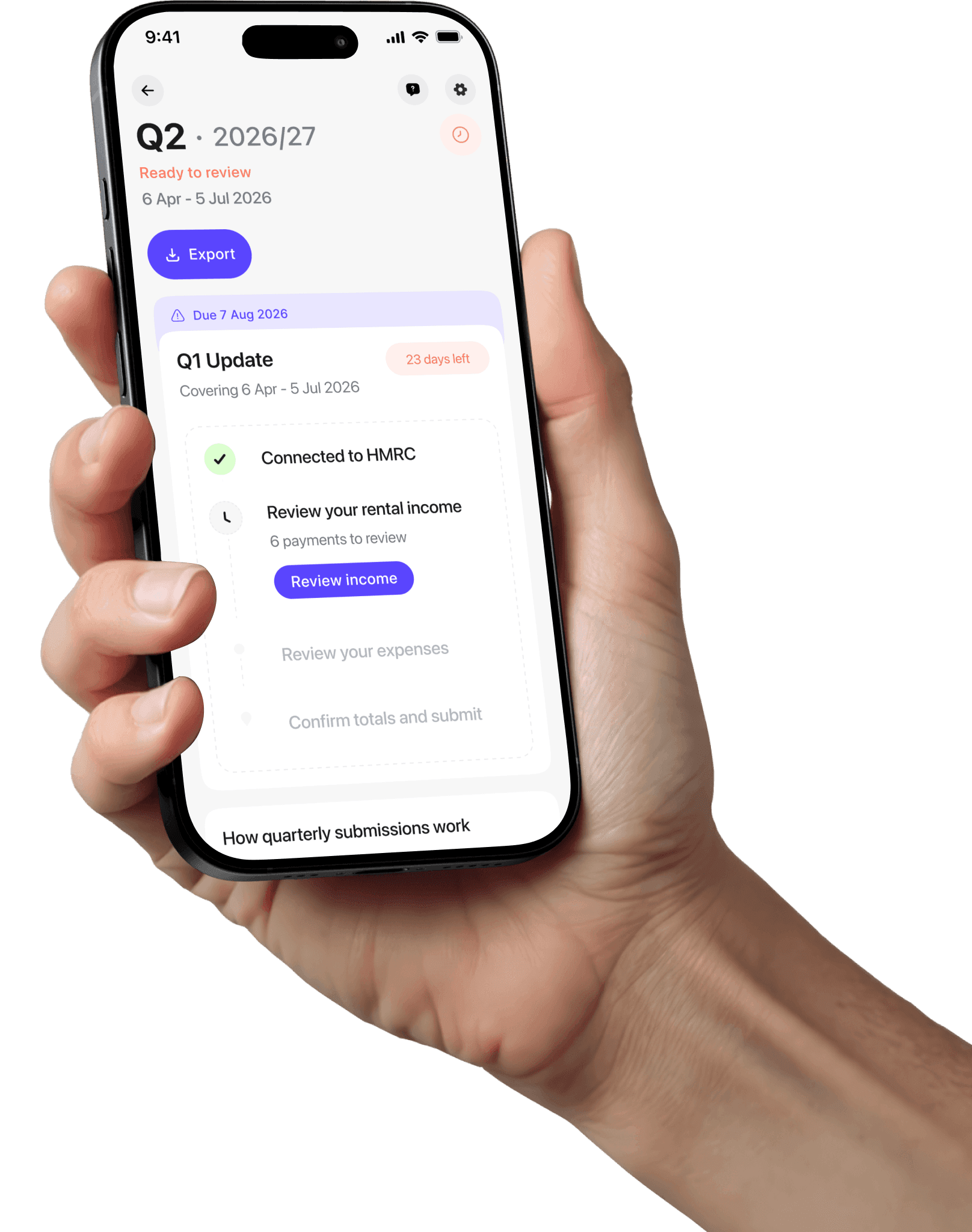
When Rent a Room income exceeds the threshold and you opt for Method A, accurate expense records become essential. August's expenses feature records costs against the correct HMRC categories and keeps records ready for Self Assessment.
What does not qualify
The scheme does not apply to self-contained accommodation. If the room or flat you let is genuinely self-contained, with its own kitchen and bathroom used independently, the occupier is more likely to have an assured tenancy with full private rented sector rights, not a lodger arrangement, and the Rent a Room tax relief is not available. This is the most common setup that people incorrectly assume qualifies.
Other disqualifying circumstances include letting your whole home while you are away (you must be resident during the letting), using the room for business rather than residential purposes, and holding the property outside the UK.
Possession and occupier status
From a possession point of view, Rent a Room income almost always comes from a lodger arrangement, an excluded occupier under a licence rather than an assured tenancy. This means you can usually end the arrangement by giving reasonable notice in line with the written agreement, without going to court for a possession order. The Renters' Rights Act framework, including formal Section 8 possession grounds and abolished Section 21, does not apply to excluded occupiers sharing your home.
However, the label "lodger" does not automatically create excluded occupier status. If what you call a lodger arrangement is in practice a self-contained annex or granny flat used as the occupier's only or main home, they may in law have an assured tenancy with full PRS rights and possession protections, and the Rent a Room tax relief will not be available either.
For the broader operational picture of running a live-in letting arrangement, including safety obligations, written agreements, notice, and what happens if you move out, see our entry on live-in landlords.
Side effects to be aware of
The Rent a Room scheme is a tax relief only. Taking in a lodger can affect other aspects of your finances and circumstances: your mortgage lender may require consent; your home insurer needs to be notified as residential policies may not cover paying occupiers; you will lose the 25% single-person council tax discount if it applies; and lodger income can affect means-tested benefits including Universal Credit, Housing Benefit, and Pension Credit. Capital Gains Tax and Private Residence Relief are generally unaffected by having a lodger, HMRC confirms this does not constitute "letting part of the property" for Private Residence Relief purposes.
For the complete practical guide, including how to set up a written lodger agreement, conduct right to rent checks, handle notice, and navigate the compliance requirements, see our guide to taking in a lodger in 2026.
Frequently asked questions
How much can I earn from a lodger without paying tax?
Up to £7,500 gross per year (rent plus any payments for meals, utilities, or services) if you are the sole recipient of the income. If you share the property with another person who also receives the income, a spouse, civil partner, or co-owner, the threshold is £3,750 each, as the £7,500 allowance is split between you. Below the threshold, exemption is automatic. You do not need to tell HMRC. Above the threshold, you must file a Self Assessment return and choose between Method A (tax on actual profit after expenses) or Method B (tax on gross receipts above the threshold).
Is the Rent a Room scheme worth it if I earn more than £7,500?
It depends on your expenses. If your costs are modest, you do not spend much on maintenance, utilities, or replacing furniture, Method B (paying tax only on the amount above £7,500) is usually simpler and results in a lower tax bill than the standard property income route. If your allowable expenses are substantial, Method A will often produce a lower taxable profit than the flat excess above the threshold. Calculate both each year before filing, as you can switch methods annually by notifying HMRC on your tax return.
Can I use the Rent a Room scheme for Airbnb?
Yes, if you live in the property during the guest's stay and the room is in your main home. Airbnb lettings where you remain in residence qualify as furnished residential accommodation in your main home, the fact that they are short-term does not exclude them. However, if you let your whole property while you are away, that income is standard property income and does not qualify for the Rent a Room scheme regardless of how short the letting is.