Lessee
A lessee is the party who is granted a lease by the lessor, in plain English, the person who receives the right to occupy a property under a lease and who pays rent and, in many cases, other sums such as service charges. The counterpart term is lessor. The party who grants the lease and holds the superior interest. In day-to-day private renting, the lessee is called the tenant and the document is a tenancy agreement; in long leasehold property, the lessee is the leaseholder. The vocabulary overlaps and the same person can be both lessee and lessor simultaneously. GOV.UK guidance on leasehold property explains the basic framework for long lessees in England.
Lessee in leasehold property
In leasehold ownership, the dominant form for flats in England, the lessee owns a long lease over the property but not the freehold, and owes ongoing obligations to the freeholder throughout the lease term. These obligations are set out in the lease covenants and typically include paying ground rent (for pre-2022 leases, ground rent was abolished by the Leasehold Reform (Ground Rent) Act 2022 for new leases from 30 June 2022), paying service charges for building maintenance and insurance, keeping the interior in repair, not making structural alterations without consent, and complying with restrictions on use, subletting, pets, and the number of occupants.
The lessee's financial obligations under the headlease typically extend beyond ground rent to include service charges, variable annual payments covering building maintenance, insurance, and communal areas, which can be challenged at the First-tier Tribunal if they are unreasonable. The right to challenge is one of the most important statutory protections available to a long lessee and does not require legal representation to exercise.
Long lessees in England also hold statutory rights under the Leasehold Reform, Housing and Urban Development Act 1993: qualifying lessees can extend their lease by 90 years (added to the current unexpired term) at a peppercorn ground rent, or collectively enfranchise, acquire the freehold, by combining with other qualifying leaseholders. These rights exist regardless of what the lease says and cannot be contracted out of.
The leaseholder-landlord: lessee and lessor simultaneously
A buy-to-let landlord who owns a flat on a long lease occupies both roles at once. They are a lessee in relation to the freeholder above, bound by the headlease covenants, and a lessor to their own tenant below. This two-tier structure has practical consequences that are distinct from freehold letting.
The lessee-landlord cannot offer their tenant more than the headlease permits. Many long leases restrict subletting (requiring the freeholder's consent), prohibit or limit pets, restrict the number of occupants, and impose conditions on alterations. A landlord who grants a tenancy offering pet-friendly terms, or promises a parking space or storage facility, without first checking the headlease is potentially in breach of their own lease covenants, even if they had no intention of doing so.
Building-level issues, including structural repairs, roof, cladding, communal heating, lifts, typically sit with the freeholder rather than the leaseholder-landlord. A tenant who raises a repair complaint about something outside the flat may be holding the lessee-landlord responsible for something they can only resolve by escalating to the freeholder, which can create delay and friction. The lessee-landlord's repairing obligation under the Landlord and Tenant Act 1985 continues to apply to the interior and to installations within the flat; the division of responsibility between lease layers does not transfer statutory duties to the freeholder from the tenant's perspective.
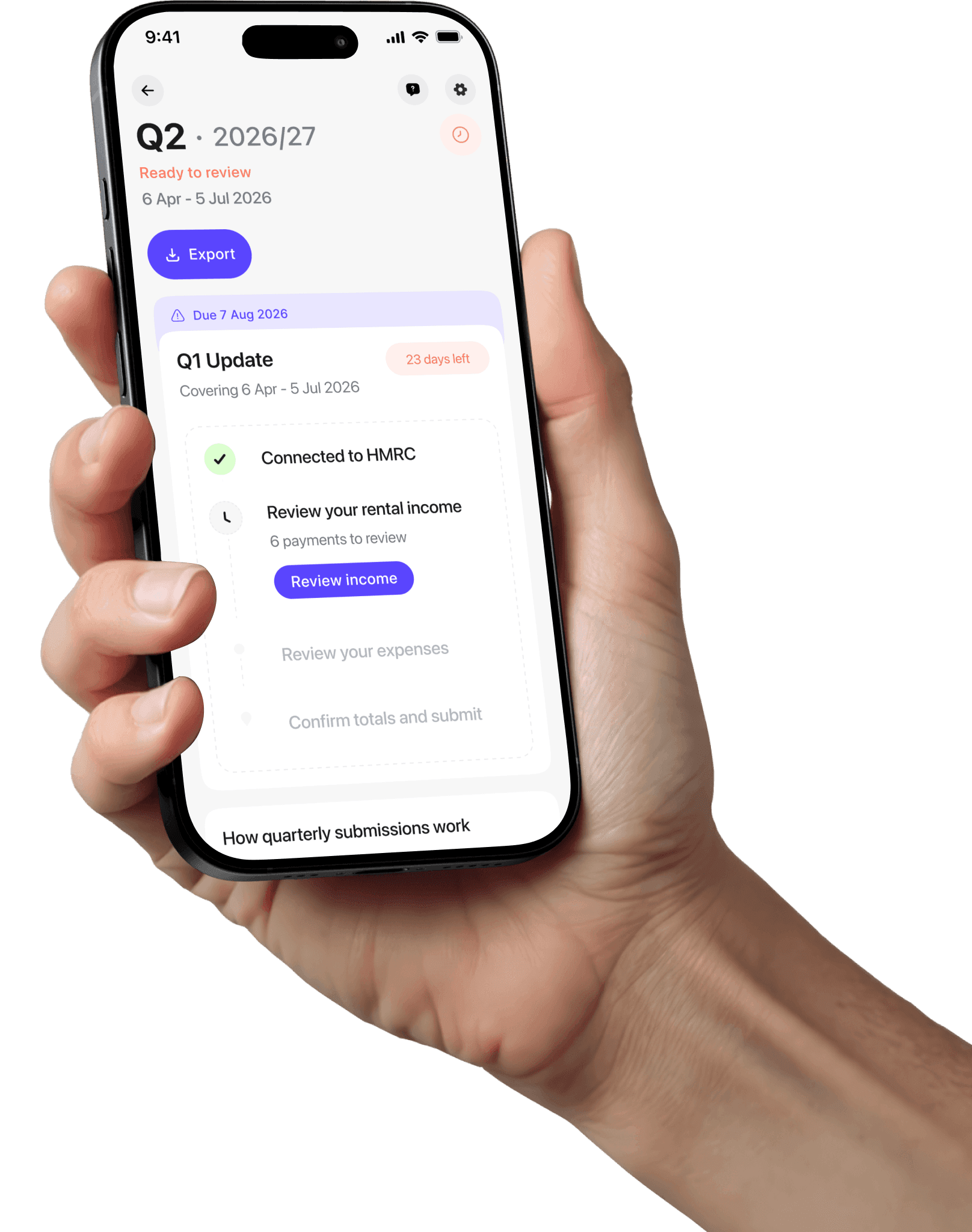
Leaseholder-landlords who need to track both their headlease obligations upward and their tenancy obligations downward can use August's document management feature to store both layers of documentation in one place, including headlease, management pack, sub-tenancy agreement, and correspondence with the freeholder or managing agent.
Lessee in accounting (IFRS 16)
Outside property letting, "lessee" appears frequently in accounting and corporate finance. Under IFRS 16 (the international lease accounting standard in force from 2019), a lessee is the entity that uses an asset, office space, equipment, vehicles, under a lease agreement. IFRS 16 requires lessees to recognise a right-of-use asset and a corresponding lease liability on their balance sheet, bringing most leases onto the balance sheet for the first time. This accounting use of "lessee" is distinct from residential or commercial property letting but explains why the term appears in corporate finance, audit, and management accounting contexts as well as in property documentation.
The Renters' Rights Act 2025 and the lessee-as-landlord
The Renters' Rights Act 2025 came into force on 1 May 2026, abolishing Section 21 no-fault evictions and converting most private assured tenancies to open-ended assured periodic tenancies. For a lessee-as-landlord, this change made the headlease covenant constraints more material, not less. Previously, a lessee-landlord facing a difficult situation, a repair that the freeholder was slow to address, a service charge dispute affecting habitability, could resort to a Section 21 notice to end the tenancy without demonstrating fault. That option no longer exists. The lessee-landlord must now resolve root-cause issues, or demonstrate a statutory ground for possession, rather than using tenancy end as a workaround for structural problems. This increases the practical importance of understanding what the headlease permits, what it obliges, and where the boundary of the lessee's own repairing responsibility falls.
For a practical overview of what a well-drafted tenancy agreement should include, and how lessee obligations translate into the sub-tenancy the leaseholder-landlord grants downward, see our guide to what a tenancy agreement should include.
Frequently asked questions
What is the difference between a lessee and a lessor?
The lessor grants the lease and holds the superior interest, in property terms, usually the landlord or freeholder. The lessee receives the lease, pays rent, and occupies the property. In a standard private tenancy, the lessor is the landlord and the lessee is the tenant. In a long leasehold flat, the freeholder is the lessor to the leaseholder, who is the lessee. The same person can be both: a leaseholder who sublets is a lessee to the freeholder above and a lessor to their tenant below.
Is the lessee the same as the tenant?
In everyday private renting they are effectively the same, the tenant is the lessee of a short-term tenancy and the landlord is the lessor. The terms are interchangeable in that context. In long leasehold ownership, "lessee" specifically describes the holder of the long lease (the leaseholder), while "tenant" usually refers to someone holding a shorter-term assured tenancy.
What is a head lessee?
A head lessee is a person or company that holds a lease directly from the freeholder and then grants sub-leases or sub-tenancies to occupants below. The head lessee sits between the freeholder and the end occupiers, acting as lessee upward and lessor downward simultaneously. In rent-to-rent arrangements, the operator taking the lease from the property owner is effectively the head lessee. The term also appears in large commercial and residential developments where a management company holds the headlease of an entire block.
Can a lessee sublet?
It depends on the terms of the lease. Most long residential leases contain an express restriction requiring the freeholder's consent before subletting. Without that consent, subletting is a breach of covenant. In periodic tenancies under the Housing Act 1988, section 15 implies a restriction against subletting without the landlord's consent where the lease is silent. A lessee who wishes to sublet should check the headlease covenants before offering the property to a tenant.