Compliance & Safety Certificates
Nation by nation
Smoke alarm regulations in rental properties

Fire is one of the gravest risks a tenant faces at home. Around 37,000 accidental dwelling fires are attended by fire and rescue services in England each year, and a working smoke alarm dramatically increases the chance of a safe escape. As a landlord you have a clear legal duty to install smoke alarms in your rental property, and failing to do so carries both financial penalties and serious moral consequences. This guide explains what the current regulations require in England, what type of alarm to fit and where, your testing and repair duties, and what happens if you do not comply.
What are the smoke alarm regulations for landlords?
The requirements in England are set out in the Smoke and Carbon Monoxide Alarm (England) Regulations 2015, as amended by the Smoke and Carbon Monoxide Alarm (Amendment) Regulations 2022. The amendment came into force on 1 October 2022 and extended the rules to social housing landlords for the first time, where previously only private landlords were covered. In summary, landlords must install at least one smoke alarm on every storey of the property used as living accommodation, ensure all smoke alarms are in working order at the start of every new tenancy, and repair or replace any faulty alarm as soon as reasonably practicable after being told about it. The government’s explanatory guidance for landlords sets out the detail. These three duties are the legal minimum; fire and rescue services recommend going beyond them, and HMOs require considerably more.
What counts as a storey used as living accommodation?
The phrase is broader than it first appears. It does not mean only floors with bedrooms; any floor where a tenant lives, sleeps, cooks or spends time qualifies, so the ground floor with the kitchen or living room counts, as does any upper floor with bedrooms or living space, a basement used as a habitable or accessible room, and a converted, occupied attic. A floor containing only a bathroom or inaccessible storage is generally not living accommodation. The requirement is per storey, not per room: one alarm per floor meets the minimum, positioned where it will detect smoke most effectively.
What changed under the 2022 amendment?
The core smoke alarm requirement, one per storey of living accommodation, has been in place since 2015 and did not change in 2022. The amendment brought registered social landlords into scope for the first time, made the duty to repair or replace a faulty alarm an explicit legal obligation rather than an implied one, and expanded the carbon monoxide rules. A CO alarm is now required in any room used as living accommodation that contains a fixed combustion appliance, other than a gas cooker. The detail is in our carbon monoxide alarm regulations guide. Scotland's standard is stricter: since February 2022 every home must have interlinked alarms, with one smoke alarm in the living room, one in every hallway or landing, a heat alarm in the kitchen and a carbon monoxide alarm wherever there is a fuel-burning appliance, see our Scottish landlord guide.
What type of smoke alarm should landlords install?
The regulations do not specify a type or grade for standard single lets, but the right choice matters both for safety and to avoid the false alarms that lead tenants to disable units. Ionisation alarms detect the small particles from fast-flaming fires and respond quickly, but are prone to false alarms from cooking fumes, so they are not ideal near kitchens. Optical, or photoelectric, alarms detect the larger particles from slow-smouldering fires, the kind that start in upholstery or a faulty circuit, produce fewer cooking false alarms, and are the better all-round choice for living rooms and hallways. Heat alarms trigger on a rapid rise in temperature rather than smoke, which makes them right for kitchens where a smoke alarm would constantly false-trigger; a heat alarm meets the requirement for that floor without nuisance activations, and BS 5839-6 recommends them in kitchens. Combination and multi-sensor units pair two technologies, typically optical and heat or optical and CO, and can suit a hallway next to a kitchen, provided the unit carries the relevant British Standard certification.
On that standard, BS 5839-6 is the recognised benchmark for domestic smoke detection and uses two classifications. Grade refers to the power supply: Grade D, mains-powered with battery backup, is recommended for new installations, while Grade F, battery only, is acceptable in single lets. Category refers to coverage: Category LD2, covering escape routes plus rooms where fire is most likely, is recommended for standard lets, while Category LD1, whole-property coverage, is typically required for HMOs.
Where should smoke alarms be positioned?
Smoke rises, so alarms should be ceiling-mounted, following the National Fire Chiefs Council guidance. Mount centrally, ideally in the hallway or landing where smoke from any room will reach it, at least 30 cm from any wall or light fitting so air circulates around the sensor. Do not fit a smoke alarm in a kitchen, where cooking will cause false alarms, or in a bathroom, where shower steam will, and use a heat alarm in the kitchen instead. Avoid positions next to air vents, extractor fans or windows, where airflow can dilute smoke before it reaches the sensor, and on a pitched ceiling mount the alarm around 600 mm from the apex to avoid the dead-air zone. For a typical two-storey house the most effective layout is an optical alarm on the ground-floor hallway ceiling, an optical alarm on the first-floor landing ceiling, and a heat alarm in the kitchen, which exceeds the minimum and protects the whole property.
Testing obligations at the start of each tenancy
You must ensure every smoke alarm is in working order at the start of each new tenancy. Before the tenant moves in:
Press the test button on every alarm and confirm it sounds.
Replace the batteries in any that does not sound, then retest, and replace the unit if it still fails.
Check the manufacture or replacement date on each unit and replace any that is over ten years old or past its recommended date.
Record the test in your move-in paperwork, noting the date, each alarm location and the result.
Give the tenant written confirmation that all alarms have been tested.
Show the tenant where each alarm is and explain what to do if one sounds.
There is no legal requirement to test at fixed intervals during the tenancy, but fire and rescue services recommend monthly testing, so encourage the tenant to test monthly and to report any fault promptly, and include that in the welcome pack.
Repair and replacement obligations
If a tenant reports a faulty alarm, you must repair or replace it as soon as reasonably practicable. Given the safety risk, treat it as urgent, in practice within 24 to 48 hours, and keep records of all repairs and replacements, including proactive replacements as units approach the end of their service life. The split of responsibility is clear: tenants are expected to test periodically and report faults, while landlords are responsible for all repairs and replacements and for ensuring working alarms are in place before any new tenancy begins.
What happens if you do not comply?
Local housing authorities enforce the regulations. If they believe a landlord has failed to comply, they can issue a remedial notice requiring the alarms to be installed or repaired within 28 days; if the landlord does not comply, the authority can arrange the work at the landlord’s expense and can impose a civil penalty of up to £5,000. Beyond the regulations themselves, fire is a Category 1 hazard under the Housing Health and Safety Rating System, so the absence of adequate detection can trigger improvement notices, prohibition orders and further action, and there are serious civil and reputational consequences if a fire occurs where working alarms were absent.
Smoke alarms in HMOs
Houses in multiple occupation face significantly stricter fire safety requirements, and selective licensing conditions often add to them. The typical standard for a licensed HMO is a mains-wired, interlinked system throughout, so all alarms sound when any one triggers, with alarms in every sleeping room and in all corridors, hallways and landings rather than one per storey, heat alarms in kitchens that are also mains-wired and interlinked, compliance with BS 5839-6 Grade D at Category LD1 or LD2 depending on size and layout, and emergency lighting in common areas of larger HMOs. HMO fire safety goes well beyond alarms to fire doors, escape routes and sometimes sprinklers, which our guide to HMO fire safety requirements covers in full.
Scotland, Wales and Northern Ireland
The rules above apply in England. The other nations differ, and in two cases are stricter.
Scotland has the strictest standard of any UK nation, and it applies to every home, not just rentals. Since February 2022, each home must have a smoke alarm in the living room and in every circulation space on each storey, a heat alarm in the kitchen, a CO detector where there is a fixed combustion appliance, and all alarms interlinked so they sound together.
Wales is also stricter than England, not equivalent to it. Under the Renting Homes (Fitness for Human Habitation) (Wales) Regulations 2022, the smoke alarm on each storey must be connected to the mains and interlinked with the other mains smoke alarms, so battery-only units do not meet the Welsh standard, and a CO alarm is required in any room with a gas, oil or solid-fuel appliance or flue. A valid electrical condition report, renewed at least every five years, is also part of the Welsh fitness requirements.
Northern Ireland operates under separate building regulations, so consult the relevant local authority and Department for Communities guidance.
Your wider fire safety obligations
Smoke alarm compliance is one part of a broader duty. The HHSRS fire assessment also looks at means of escape, furniture and furnishings compliance under the Furniture and Furnishings (Fire Safety) Regulations 1988, electrical safety, and gas appliance safety, so keeping your gas safety record current and your EICR within its five-year validity are essential alongside the alarms.
Smoke alarm compliance checklist
Identify every floor used as living accommodation.
Confirm at least one smoke alarm on each floor, using a heat alarm in the kitchen.
Check the manufacture date of every alarm and replace any unit over ten years old.
Test every alarm and document the results in your move-in paperwork.
Confirm your gas safety certificate is current and your EICR is within its five-year validity.
Confirm CO alarms are in place in all rooms with a fixed combustion appliance, other than a gas cooker.
Give the tenant a written test record and explain the emergency procedure.
Frequently asked questions
Do I need a smoke alarm on every floor?
Yes, at least one on every storey used as living accommodation, so a two-storey house needs a minimum of two.
Do I need a smoke alarm in the kitchen?
The requirement covers every storey of living accommodation, including a floor with a kitchen, but a smoke alarm in a kitchen will false-trigger from cooking, so the recommended solution is a heat alarm in the kitchen, which meets the requirement for that floor without nuisance activations.
Can I use a battery-powered smoke alarm?
Yes, for standard single lets in England: a battery-powered Grade F alarm meets the minimum, though long-life sealed-battery units are best practice so tenants cannot remove or deplete the battery. HMOs, and rented homes in Wales and Scotland, require mains-powered interlinked alarms.
Do smoke alarms need to be interlinked?
Not for standard single lets in England. Interlinking is required for HMOs, is the standard in Scotland, and is required for the mains alarms in Wales. It is strongly recommended everywhere, since it alerts all occupants wherever they are in the property.
How often do I need to replace smoke alarms?
Most manufacturers recommend replacing the whole unit every ten years as the sensor degrades; the manufacture date is usually printed on the back. Replace non-sealed batteries annually or when a low-battery warning sounds.
Am I responsible for smoke alarms in communal areas of a block?
Communal areas are governed by the Regulatory Reform (Fire Safety) Order 2005, not the 2015 regulations; the building’s responsible person handles communal fire safety, and your duty under the 2015 regulations applies to the interior of your flat.
What should a tenant do if a smoke alarm sounds?
Leave the building immediately by the nearest safe exit, close doors behind them to slow the spread, and call 999 once outside, and not re-enter until the fire service says it is safe.
Key takeaways
At least one smoke alarm must be installed on every storey used as living accommodation, a legal requirement in England since 2015.
All alarms must be tested at the start of every new tenancy and repaired or replaced promptly when faulty.
Use a heat alarm in the kitchen rather than a smoke alarm to avoid nuisance false alarms.
Local authorities can issue remedial notices and civil penalties of up to £5,000 for non-compliance.
HMOs require mains-wired, interlinked alarms throughout, a substantially higher standard than single lets.
Scotland requires interlinked alarms in all homes, and Wales requires mains-powered, interlinked alarms on each storey under its fitness regulations; Northern Ireland differs again.
Smoke alarm compliance sits alongside your gas safety, EICR, CO alarm and furniture fire safety duties as part of your overall obligation to provide a safe home.
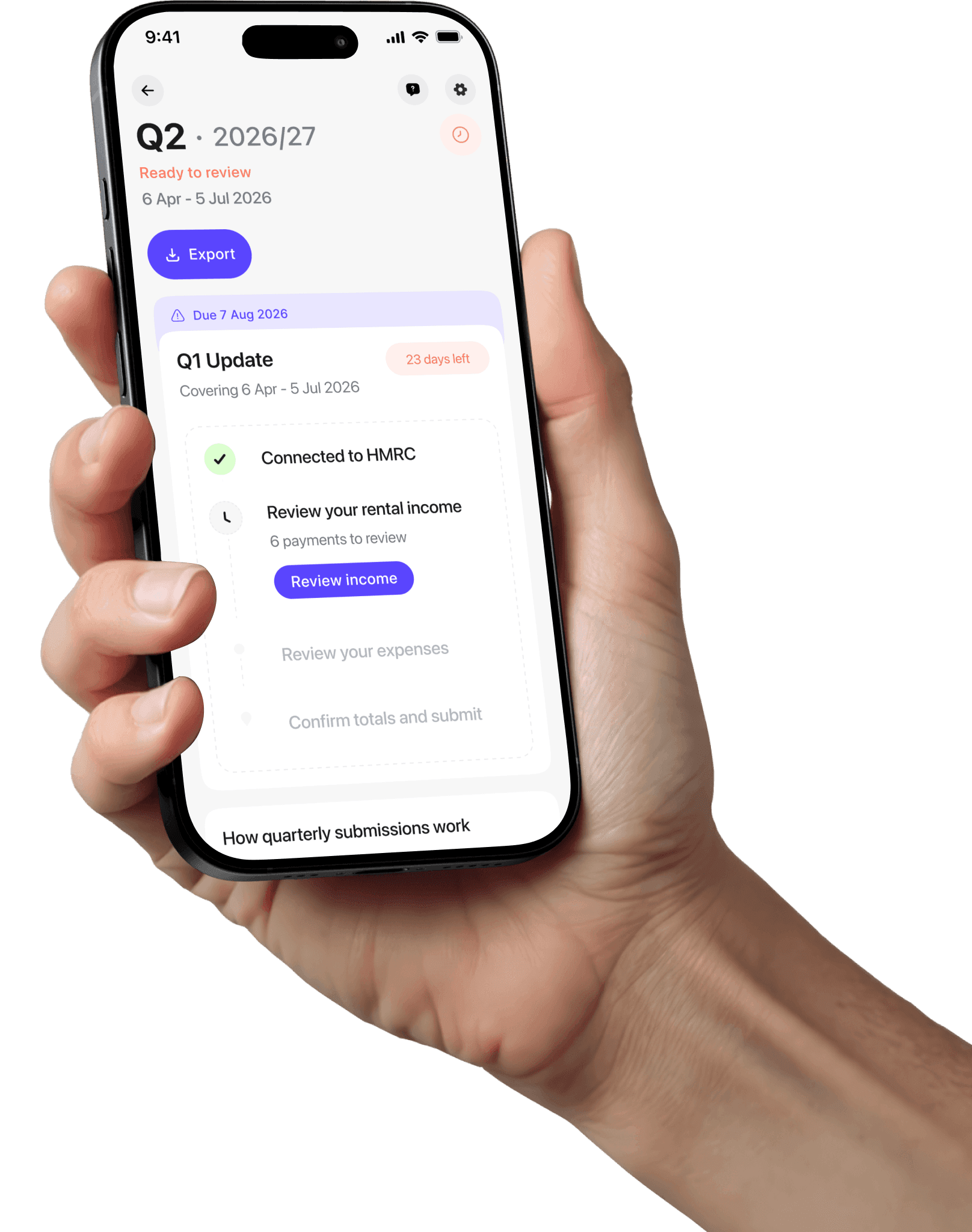
Keeping track of alarm tests, replacement dates and the rest of your safety obligations is exactly what August’s compliance reminders are built for, and it is free for up to two properties.
Disclaimer: This article is intended for general informational purposes only and does not constitute legal, financial, or professional advice. Landlord and tenant law is subject to change, and the information in this article reflects the position at the time of writing. You should always seek independent legal or professional advice before taking any action in relation to your property or tenancy.

Author
August Team
The August editorial team lives and breathes rental property. They work closely with a panel of experienced landlords and industry partners across the UK, turning real-world portfolio and tenancy experience into clear, practical guidance for small landlords.