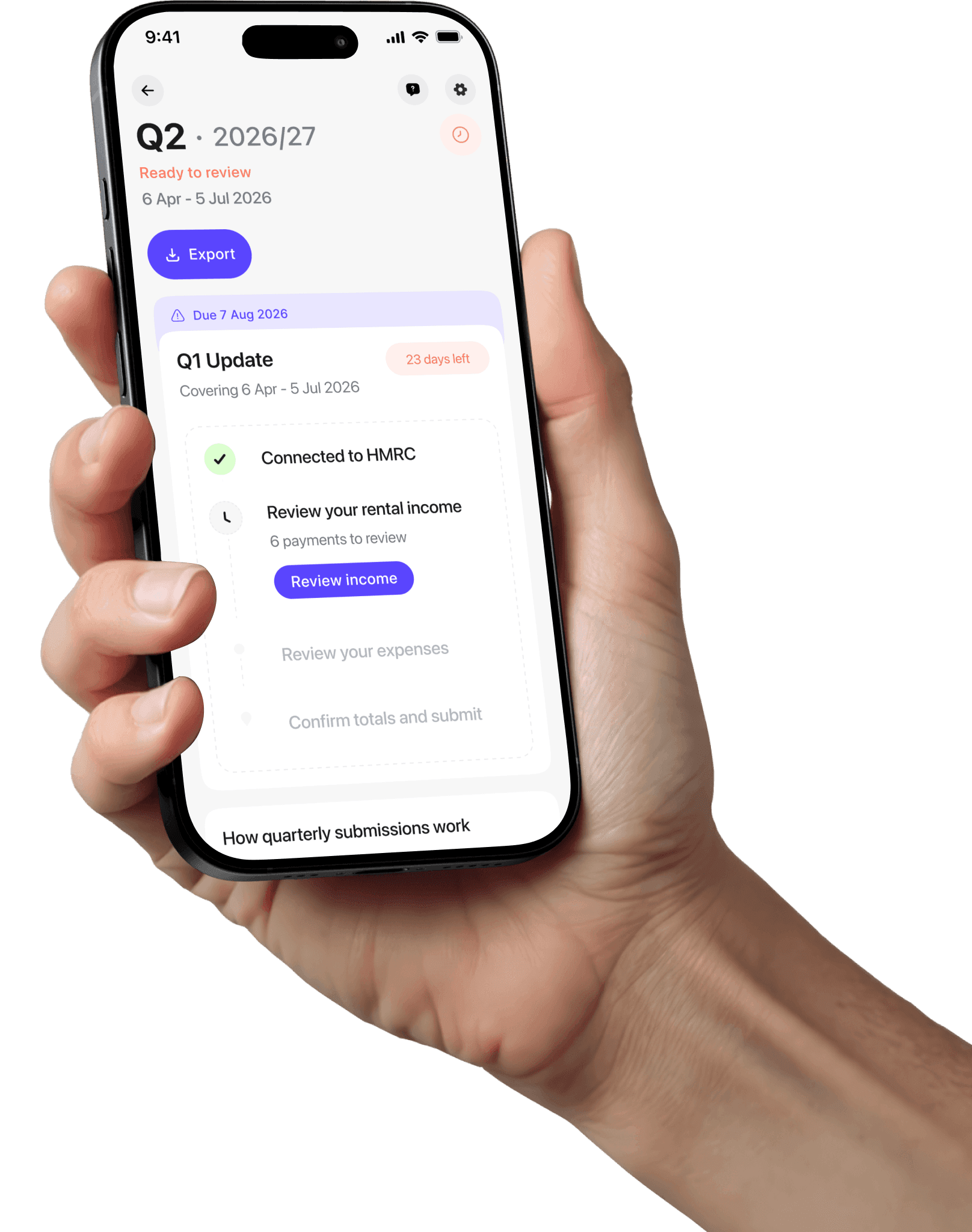
Landlord Software & Technology
Landlord CRM software 2026: do you need one and what should it do

Managing a rental property involves far more than collecting rent at the end of each month. Between tenancy agreements, safety certificates, maintenance requests, and a compliance landscape that grows more complex by the year, the administrative burden on self-managing landlords in England and Wales has never been heavier. Into this gap has stepped the landlord CRM, also described as a property management CRM, a category of software designed to centralise, automate and simplify the relationship between a landlord and every property in their portfolio.
This article explains what a landlord CRM is, why a property management CRM matters in 2026, what separates an effective system from a basic tool, and how August approaches all of it.
What is a landlord CRM?
CRM stands for customer relationship management, a term that originated in sales and marketing to describe software that tracks interactions with customers across their lifecycle. In the context of property, the customers are tenants, and the relationships being managed stretch from initial referencing through to move-out and deposit return.
A landlord CRM goes further than the original concept. It is not simply a contact database. It is an operational platform that ties together the people, properties, tenancies, documents, finances and compliance tasks that a landlord must keep on top of at all times. The UK rental market has become demanding enough that managing tenant relationships through a combination of email threads, spreadsheets and paper files is no longer sustainable for most landlords, particularly given the requirements introduced by the Renters’ Rights Act from 1 May 2026.
At the simplest level, a property management CRM helps you know who is renting which property, what they owe, what documents have been shared with them, and what compliance tasks are outstanding. At its most sophisticated, it automates reminders, scans uploaded documents to extract key dates, tracks maintenance from report through to resolution, and gives you a real-time view of your entire portfolio from a single dashboard.
Why a property management CRM matters more in 2026
The UK private rented sector has undergone significant legislative change over recent years, and 2026 represents a watershed moment. The Renters’ Rights Act abolishes Section 21 “no-fault” evictions and introduces mandatory landlord registration, an expanded role for the Private Rented Sector Ombudsman, and stricter standards around property conditions under Awaab’s Law. At the same time, Making Tax Digital for Income Tax will require landlords to maintain digital records and submit quarterly updates to HMRC.
Against this backdrop, the administrative consequences of poor record keeping have become genuinely serious. A landlord who cannot demonstrate that a gas safety certificate was served on a tenant, that a deposit was protected within 30 days, or that a possession notice was correctly issued, risks financial penalties, restricted access to possession proceedings, and reputational damage. A good system is the organisational infrastructure that turns intended compliance into provable compliance.
For small landlords managing between one and thirty properties, the stakes are especially high. Without a letting agent to absorb administrative complexity, everything falls to the landlord personally. The right platform levels the playing field, giving individual landlords access to the kind of systematic oversight that larger operators have always enjoyed.
What an effective property management CRM actually does
The question of what an effective system does is not simply a matter of listing features. It is about how those features work together to support a landlord across every stage of a tenancy. The framework below sets out what genuine effectiveness looks like.
Centralised tenancy and tenant management
A capable system holds every tenancy in a structured record, including tenant name and contact details, rent amount and payment day, tenancy start date, and any associated notes or correspondence. This sounds basic, but the difference between storing this information in a spreadsheet and storing it in a purpose-built platform is the difference between a snapshot and a living record that updates as events unfold.
Purpose-built software lets you see immediately which tenancies are active, which are approaching renewal, and which tenants have a history of late payment. This kind of visibility is the foundation of proactive management. Our guide to property management apps for UK buy-to-let landlords gives a broader overview of how these tools fit into the modern landlord’s workflow.
Rent tracking and reconciliation
Rent is the financial heartbeat of any portfolio, and yet manual reconciliation remains one of the most time-consuming tasks self-managing landlords face. An effective platform connects to your bank account through Open Banking, automatically matching incoming payments to the correct tenancy so that you can see at a glance who has paid, who is late, and what any underpayments amount to.
Timely identification of rent arrears is not merely a financial concern. Under the Renters’ Rights Act, the grounds for possession on rent arrears have been restructured. Ground 8, which now requires at least three months’ rent to be outstanding both at the date of notice and at the date of the hearing, demands meticulous records of when each payment was received, what was owed, and what shortfall exists. Accurate rent tracking makes that evidence straightforward to produce. For more on managing late payments, see our guide on how to handle late rent payments.
Document storage and compliance tracking
Compliance documentation is the area where these systems deliver some of their most tangible value. Every tenancy requires a suite of documents: the tenancy agreement itself, the gas safety certificate, the EICR, the EPC, the prescribed information about deposit protection, and the government’s How to Rent guide. Each of these has its own renewal cycle, and failure to maintain and serve them correctly can have serious legal consequences.
A genuinely effective system does not simply store documents. It reads them. It extracts expiry dates from uploaded certificates and offers to create automated reminders so that renewals are never missed. It tracks when documents were shared with tenants, providing an audit trail that is essential if possession proceedings ever become necessary. Where deposit protection is not handled correctly, for context, the penalties can amount to up to three times the deposit value.
Maintenance management
Maintenance is one of the areas where the relationship between landlord and tenant is most likely to break down. Without a structured system, requests arrive by text or email, responses get lost, and neither party has a clear record of what was reported, when, and what action was taken.
A platform with built-in maintenance tracking lets tenants log issues directly through an app, with photos and descriptions attached. The landlord receives a structured notification, can update the status as work progresses, and retains a timestamped log of the entire exchange. This is not just helpful for organisation. It is protection against claims of disrepair and evidence of responsiveness in any dispute.
Smart reminders and automated alerts
The compliance calendar for a single tenancy typically includes gas safety renewals, EICR renewals, EPC renewals, deposit protection anniversaries, rent review dates, and tenancy renewal windows. Multiply this across even three or four properties and the number of dates to track becomes genuinely difficult to manage by hand.
Effective systems use automated reminders to flag upcoming deadlines before they become problems. The best go further, using artificial intelligence to scan uploaded documents and suggest reminders based on what they find, rather than requiring the landlord to enter dates manually.
Portfolio-level insight
A landlord managing more than one property needs visibility across the whole portfolio, not just within individual tenancies. A strong platform provides a dashboard view of all properties: which are fully tenanted, which have maintenance issues outstanding, which have compliance tasks approaching, and what the overall rent collection picture looks like.
This is what distinguishes a genuine CRM from a simple filing system. The insight is actionable. You do not have to dig through records to find out what needs attention, because the system surfaces it for you.
What makes a property management CRM truly effective
Many tools claim to be landlord CRMs. Fewer genuinely are. The difference lies in whether a system is built around the real workflow of a self-managing UK landlord, or whether it has simply been adapted from a generic product management tool or, worse, a commercial letting-agency platform scaled down without redesign.
The systems that work share several characteristics. They are mobile-first, because landlords manage their portfolios on the move rather than only from a desktop, though a web interface matters too for browser access from a laptop. They are UK-specific in their compliance framework, because the regulatory landscape in England and Wales is materially different from that in other markets. They integrate rent tracking, document management, maintenance, compliance and communication in a single platform, rather than forcing landlords to switch between separate tools. And they are designed for simplicity, because most small landlords are not property professionals and do not have time to navigate complex software.
An equally important characteristic is that the right system grows with the landlord. A platform that charges per unit, or that becomes unwieldy as a portfolio expands beyond a handful of properties, is not a genuine long-term solution. The right system supports one property or ten with the same ease.
August as a landlord CRM
August is built from the ground up as an all-in-one property management platform for self-managing UK landlords. It functions as a fully integrated landlord CRM, combining tenancy management, rent tracking, document storage, compliance tools, maintenance management and AI-powered automation in a single app, designed for use on mobile and desktop alike.
Rent tracking that does the reconciliation for you
August connects to your bank account through Open Banking, automatically matching incoming payments to the right tenancy. You see immediately who has paid, who is late, and what any partial payment amounts to. Two years of payment history are available from the moment you connect, giving you a clear picture of each tenant’s track record without importing historical data manually. See August’s rent tracking feature for more detail.
Document storage with intelligent scanning
August’s document storage goes beyond a simple file library. When you upload a gas safety certificate, EICR or tenancy agreement, August reads the document, identifies key dates, and offers to set up automated reminders in a single click. You do not need to enter expiry dates by hand or maintain a separate calendar; the system does it for you, based on what it finds in the document itself.
Documents are stored securely and can be shared directly with tenants through the app. Tenants can access their copy of the tenancy agreement, safety certificates and prescribed information at any time, which reduces the number of requests landlords receive and supports compliance with document-serving obligations.
A compliance journey built for England and Wales
August’s compliance checklist covers the full range of obligations that apply to most private landlords in England and Wales: gas safety, EICR, EPC, Right to Rent, deposit protection, HMO licensing and selective licensing. Each item is linked to guidance and resources, and the checklist is structured around individual properties so that compliance status is visible at property level, not just across the portfolio.
This is particularly valuable in the post-Renters’ Rights Act environment, where landlords can seek possession only through Section 8 grounds, and where a history of non-compliance can complicate proceedings. For more on what these changes mean in practice, see our guide to Section 8 notices for 2026.
Maintenance management with tenant-facing tools
August’s maintenance management feature lets tenants raise issues directly through the August tenant app, complete with photos and descriptions. Landlords receive a structured notification, can update the status as the work progresses, and retain a full timestamped log. Tenants can see progress in real time, which reduces follow-up calls and supports the kind of professional, transparent relationship that heads off tenancy disputes.
Smart reminders and August Intelligence
August’s smart reminders are integrated with August Intelligence, the platform’s AI assistant. When you upload a document, August Intelligence reads it and suggests reminders based on the expiry dates it finds. When you ask a question about your portfolio in natural language, it searches your data and returns a clear, context-aware answer. You might ask when the gas safety certificate at your Manchester property expires, or whether Flat 4 has ever paid late, and receive an accurate response drawn from your own records.
This kind of assistance is particularly useful for landlords managing several properties at once, where keeping track of individual details across multiple tenancies would otherwise take considerable time. For more on how AI is changing property management, see our article on how AI technology can support landlords.
Portfolio-level insights
August’s property insights feature provides a dashboard view across every property: EPC rating, council tax band, estimated property value, compliance status and rent collection summary. This makes August a genuine property management CRM in the fullest sense, a system where oversight is automatic rather than effortful.
A tenant app that strengthens the relationship
One element of August that goes beyond many landlord CRM systems is the dedicated tenant app. Tenants receive a separate, branded experience where they can pay rent in-app, view their payment history, access shared documents and raise maintenance requests. This creates a structured, professional channel for tenant communication, reducing ad hoc messages to personal phone numbers and email addresses while maintaining a clear record of all interactions.
Good landlord and tenant relationships begin with good referencing. August supports a structured approach to tenant referencing, setting the right foundations before a tenancy begins.
Choosing the right property management CRM for your portfolio
Not every system will suit every landlord. When weighing your options, it is worth asking a small number of focused questions. Does the system support the specific compliance requirements of the UK private rented sector, or is it a generic tool that needs customising to be useful in an English and Welsh context? Is it genuinely mobile-first, or does it need a desktop for full functionality? Does it integrate rent, compliance, documents and maintenance in one place, or will you need separate tools for different tasks? And does it offer a tenant-facing experience, or does it serve the landlord alone?
For a broader comparison of platforms, see our best property management software guide for UK landlords. If you are at the early stages of understanding what these tools can do, the August landlord dictionary is a useful reference for unfamiliar terms.
The move from spreadsheets and email to a purpose-built system is one of the highest-return changes a self-managing landlord can make. The time saved on manual reconciliation, the compliance risks avoided through automated reminders, and the improved tenant experience that comes from structured communication all compound over time. In a regulatory environment where the cost of getting things wrong is rising, the right platform is no longer optional.
Frequently asked questions
What does CRM stand for in property management?
Customer relationship management. In a property context the customers are tenants, and the system tracks the full relationship: referencing, the tenancy, rent, documents, maintenance and compliance.
What is the difference between a property management CRM and property management software?
In practice the terms overlap heavily. CRM emphasises the tenant relationship and communication; property management software emphasises operations such as rent and maintenance. A good all-in-one platform such as August is both.
Do landlords actually need a CRM?
If you manage more than one tenancy, or you want provable compliance records under the Renters’ Rights Act and Making Tax Digital, a structured system is far safer than spreadsheets and email. For a single property it is optional, but it still saves time.
What is the best CRM for property management in the UK?
The right one is UK-specific in its compliance framework, works on both mobile and web, integrates rent, documents, maintenance and compliance in one place, and grows with your portfolio rather than charging per unit.
Final thoughts
The question of what an effective property management CRM does ultimately comes down to one thing: whether it gives landlords genuine control over their portfolios without demanding disproportionate time or expertise. The best systems disappear into the background of daily management, surfacing only when something needs attention and recording everything quietly as they go.
August is built with exactly this aim. It is a landlord CRM that understands the UK residential lets market, integrates every aspect of property management in a single platform, and uses AI to reduce the manual effort that has traditionally made self-management so demanding. Whether you manage one property or many, the right system is the difference between reactive landlording and confident, organised, compliant management.
To see how August works in practice, explore the full features overview or start for free.
Disclaimer: This article is a guide and not intended to be relied upon as legal or professional advice, or as a substitute for it. August does not accept any liability for any errors, omissions or misstatements contained in this article.

Author
August Team
The August editorial team lives and breathes rental property. They work closely with a panel of experienced landlords and industry partners across the UK, turning real-world portfolio and tenancy experience into clear, practical guidance for small landlords.