4.5 star rating
4.5 star rating
Buy-to-let investment calculator
A buy-to-let investment calculator works out the return on the cash you actually put into a rental property, not just the rent it earns against its price. It takes your deposit, stamp duty, buying costs, rent, running costs and mortgage, and returns your cash-on-cash return and your total return on investment. The core figure is the cash-on-cash return, which is your annual pre-tax cash flow divided by the total cash you have invested, multiplied by 100.
How the calculation works
Return on a buy-to-let is measured against the cash you invest, which is what separates it from rental yield. Yield measures rent against the property's value; this calculator measures profit against your money in the deal. Three figures matter, and the tool returns all three.
Your total cash invested is the deposit plus stamp duty plus your other buying costs:
Total cash invested = deposit + stamp duty + purchase costs
Your annual pre-tax cash flow is the rent left after running costs and the mortgage:
Annual cash flow = annual rent − running costs − annual mortgage cost
Your cash-on-cash return expresses that cash flow as a percentage of the money you put in:
Cash-on-cash return = (annual cash flow / total cash invested) × 100
And your total return on investment adds the year's capital growth to the cash flow, since a mortgaged property lets a small deposit control a much larger asset:
ROI = (annual cash flow + annual capital growth) / total cash invested × 100
The figures are pre-tax. Income tax depends on your personal position and whether you hold the property personally or through a company, which our rental income tax calculator handles separately.
A worked example
Take a £250,000 property bought with a 25 per cent deposit of £62,500. Stamp duty on an additional property at that price is about £15,000 including the 5 per cent surcharge, and legal fees, a survey and minor works come to £3,500, so the total cash invested is £81,000. The remaining £187,500 is borrowed on an interest-only mortgage at 5.5 per cent, costing £10,313 a year.
The property lets for £1,250 a month, or £15,000 a year, against £3,000 of annual running costs. The annual pre-tax cash flow is therefore £15,000 minus £3,000 minus £10,313, which is £1,688, or about £141 a month. Dividing that by the £81,000 invested gives a cash-on-cash return of 2.1 per cent.
That looks thin next to the 6 per cent gross yield, and it is, because the mortgage absorbs most of the rent. But add 3 per cent capital growth on the £250,000 property, which is £7,500 in the year, and the total return on investment becomes £1,688 plus £7,500 divided by £81,000, which is 11.3 per cent. The gap between 2.1 and 11.3 per cent is the effect of leverage: a £81,000 stake is earning the growth on a quarter-million-pound asset.
What counts as a good return on a buy-to-let?
There is no single benchmark for ROI, because it depends entirely on how much you borrow, but the rent side of the equation has a clear reference point. The rent figure drives every return on this page, so if you are not sure what the property will let for, work out how much rent you can charge from local comparables first. The average gross rental yield in the UK currently sits at around 5.8 per cent, with the North East highest at close to 7.9 per cent and London lowest at around 5.1 per cent, according to Zoopla's rental market analysis. Cash-on-cash return on a mortgaged property is usually lower than the gross yield in the early years, because the mortgage takes a large share of the rent, while total ROI including capital growth is usually higher, because the deposit is geared against the whole property. A sound way to judge a deal is to check that the cash flow is positive at today's mortgage rate and stays positive if the rate rises a point or two, rather than to chase a single headline percentage.
ROI, yield and cash-on-cash: which figure to use
Each figure answers a different question, and serious investors track all three. Use rental yield to compare properties on a like-for-like basis before financing, since it ignores the mortgage and measures rent against value. Use cash-on-cash return to judge how hard your deposit is working in the early years, when income matters most. Use total ROI to weigh the long-term return once capital growth is counted. A property can show a modest yield but a strong ROI once leverage and growth are taken into account, which is why a yield figure alone can mislead a leveraged buyer. To compare against the income-versus-value measure, our rental yield calculator works out the gross and net figure on the same property.
How the mortgage changes the return
The mortgage is the single biggest lever on a buy-to-let return, in both directions. A larger loan reduces the cash you invest, which lifts the cash-on-cash return when rates are low, but it also increases the interest bill, which can turn the cash flow negative when rates rise. From working with self-managing landlords across the UK, the deals that hold up are the ones underwritten at a stressed interest rate rather than today's, because a return that only works at the current rate is fragile. You can model the borrowing itself, including the interest cover lenders require, with our buy-to-let mortgage calculator, and check the upfront tax with our stamp duty calculator, since stamp duty is often the largest single cost after the deposit.
A calculator models a single hypothetical at the point of purchase. Across the portfolios run on August, the landlords who keep their actual return close to the figure they underwrote are the ones who track income and costs against each property as they happen, so the real return is always visible rather than reconstructed at year end. August's property insights show that live position per property.
Frequently asked questions
How do you calculate ROI on a rental property?
Divide the property's annual pre-tax cash flow, the rent left after running costs and the mortgage, by the total cash you have invested, which is the deposit plus stamp duty and buying costs, then multiply by 100. To include capital growth, add the year's increase in the property's value to the cash flow before dividing. The result is your percentage return on the money you put into the deal.
What is a good ROI on a buy-to-let?
It depends on how much you borrow, so there is no universal figure. A useful test is whether the cash flow stays positive at a mortgage rate one or two points above today's, and whether the total return, including capital growth, beats what the same cash would earn elsewhere. The average UK gross yield of around 5.8 per cent is a reference point for the rent side, not a target for ROI.
What is the difference between rental yield and return on investment?
Rental yield measures annual rent against the property's value and ignores the mortgage, so it compares properties on a like-for-like basis. Return on investment measures profit against the cash you have actually invested, so it reflects the effect of any borrowing. A geared property can show a low yield but a strong cash-on-cash or total return once leverage is taken into account.
Does this calculator include tax?
No. The figures are pre-tax, because income tax depends on your marginal rate and whether you hold the property personally or through a company. You can start for free with August to track the income and expenses that feed your tax position, and model the tax itself with our rental income tax calculator.
Disclaimer
Figures are estimates only for informational purposes and do not account for all potential costs. Check your numbers with a qualified professional before making investment decisions.
How the calculation works
Return on a buy-to-let is measured against the cash you invest, which is what separates it from rental yield. Yield measures rent against the property's value; this calculator measures profit against your money in the deal. Three figures matter, and the tool returns all three.
Your total cash invested is the deposit plus stamp duty plus your other buying costs:
Total cash invested = deposit + stamp duty + purchase costs
Your annual pre-tax cash flow is the rent left after running costs and the mortgage:
Annual cash flow = annual rent − running costs − annual mortgage cost
Your cash-on-cash return expresses that cash flow as a percentage of the money you put in:
Cash-on-cash return = (annual cash flow / total cash invested) × 100
And your total return on investment adds the year's capital growth to the cash flow, since a mortgaged property lets a small deposit control a much larger asset:
ROI = (annual cash flow + annual capital growth) / total cash invested × 100
The figures are pre-tax. Income tax depends on your personal position and whether you hold the property personally or through a company, which our rental income tax calculator handles separately.
A worked example
Take a £250,000 property bought with a 25 per cent deposit of £62,500. Stamp duty on an additional property at that price is about £15,000 including the 5 per cent surcharge, and legal fees, a survey and minor works come to £3,500, so the total cash invested is £81,000. The remaining £187,500 is borrowed on an interest-only mortgage at 5.5 per cent, costing £10,313 a year.
The property lets for £1,250 a month, or £15,000 a year, against £3,000 of annual running costs. The annual pre-tax cash flow is therefore £15,000 minus £3,000 minus £10,313, which is £1,688, or about £141 a month. Dividing that by the £81,000 invested gives a cash-on-cash return of 2.1 per cent.
That looks thin next to the 6 per cent gross yield, and it is, because the mortgage absorbs most of the rent. But add 3 per cent capital growth on the £250,000 property, which is £7,500 in the year, and the total return on investment becomes £1,688 plus £7,500 divided by £81,000, which is 11.3 per cent. The gap between 2.1 and 11.3 per cent is the effect of leverage: a £81,000 stake is earning the growth on a quarter-million-pound asset.
What counts as a good return on a buy-to-let?
There is no single benchmark for ROI, because it depends entirely on how much you borrow, but the rent side of the equation has a clear reference point. The average gross rental yield in the UK currently sits at around 5.8 per cent, with the North East highest at close to 7.9 per cent and London lowest at around 5.1 per cent, according to Zoopla's rental market analysis. Cash-on-cash return on a mortgaged property is usually lower than the gross yield in the early years, because the mortgage takes a large share of the rent, while total ROI including capital growth is usually higher, because the deposit is geared against the whole property. A sound way to judge a deal is to check that the cash flow is positive at today's mortgage rate and stays positive if the rate rises a point or two, rather than to chase a single headline percentage.
ROI, yield and cash-on-cash: which figure to use
Each figure answers a different question, and serious investors track all three. Use rental yield to compare properties on a like-for-like basis before financing, since it ignores the mortgage and measures rent against value. Use cash-on-cash return to judge how hard your deposit is working in the early years, when income matters most. Use total ROI to weigh the long-term return once capital growth is counted. A property can show a modest yield but a strong ROI once leverage and growth are taken into account, which is why a yield figure alone can mislead a leveraged buyer. To compare against the income-versus-value measure, our rental yield calculator works out the gross and net figure on the same property.
How the mortgage changes the return
The mortgage is the single biggest lever on a buy-to-let return, in both directions. A larger loan reduces the cash you invest, which lifts the cash-on-cash return when rates are low, but it also increases the interest bill, which can turn the cash flow negative when rates rise. From working with self-managing landlords across the UK, the deals that hold up are the ones underwritten at a stressed interest rate rather than today's, because a return that only works at the current rate is fragile. You can model the borrowing itself, including the interest cover lenders require, with our buy-to-let mortgage calculator, and check the upfront tax with our stamp duty calculator, since stamp duty is often the largest single cost after the deposit.
A calculator models a single hypothetical at the point of purchase. Across the portfolios run on August, the landlords who keep their actual return close to the figure they underwrote are the ones who track income and costs against each property as they happen, so the real return is always visible rather than reconstructed at year end. August's property insights show that live position per property.
Frequently asked questions
How do you calculate ROI on a rental property?
Divide the property's annual pre-tax cash flow, the rent left after running costs and the mortgage, by the total cash you have invested, which is the deposit plus stamp duty and buying costs, then multiply by 100. To include capital growth, add the year's increase in the property's value to the cash flow before dividing. The result is your percentage return on the money you put into the deal.
What is a good ROI on a buy-to-let?
It depends on how much you borrow, so there is no universal figure. A useful test is whether the cash flow stays positive at a mortgage rate one or two points above today's, and whether the total return, including capital growth, beats what the same cash would earn elsewhere. The average UK gross yield of around 5.8 per cent is a reference point for the rent side, not a target for ROI.
What is the difference between rental yield and return on investment?
Rental yield measures annual rent against the property's value and ignores the mortgage, so it compares properties on a like-for-like basis. Return on investment measures profit against the cash you have actually invested, so it reflects the effect of any borrowing. A geared property can show a low yield but a strong cash-on-cash or total return once leverage is taken into account.
Does this calculator include tax?
No. The figures are pre-tax, because income tax depends on your marginal rate and whether you hold the property personally or through a company. You can start for free with August to track the income and expenses that feed your tax position, and model the tax itself with our rental income tax calculator.
Disclaimer
Figures are estimates only for informational purposes and do not account for all potential costs. Check your numbers with a qualified professional before making investment decisions.
Try our other free landlord calculators
Try our other free landlord calculators
Try other UK landlord calculators

Investment
Rental cash flow calculator
Work out your rental cash flow easily. See how void periods, fees, mortgage costs and other costs affect your monthly and annual cash flow. Understand your breakeven rent.

Tax
Buy to let stamp duty calculator
Check stamp duty instantly across regions and buyer types. See how rates change for additional properties, non-residents, and different completion dates.
Investment
Buy to let mortgage calculator
Test different rates, terms, deposits and fees to see your monthly interest, principal and total repayment. Compare interest-only and capital and interest options to check affordability and LTV.
Complex
HMO calculator
Analyse your HMO deal in seconds. See projected cashflow, yields, ICR tests, breakeven occupancy and refinance value, all in one place.
Automate
Automate
your rentals today
your rentals today
3-day free trial
Cancel anytime
Setup in under 5 minutes
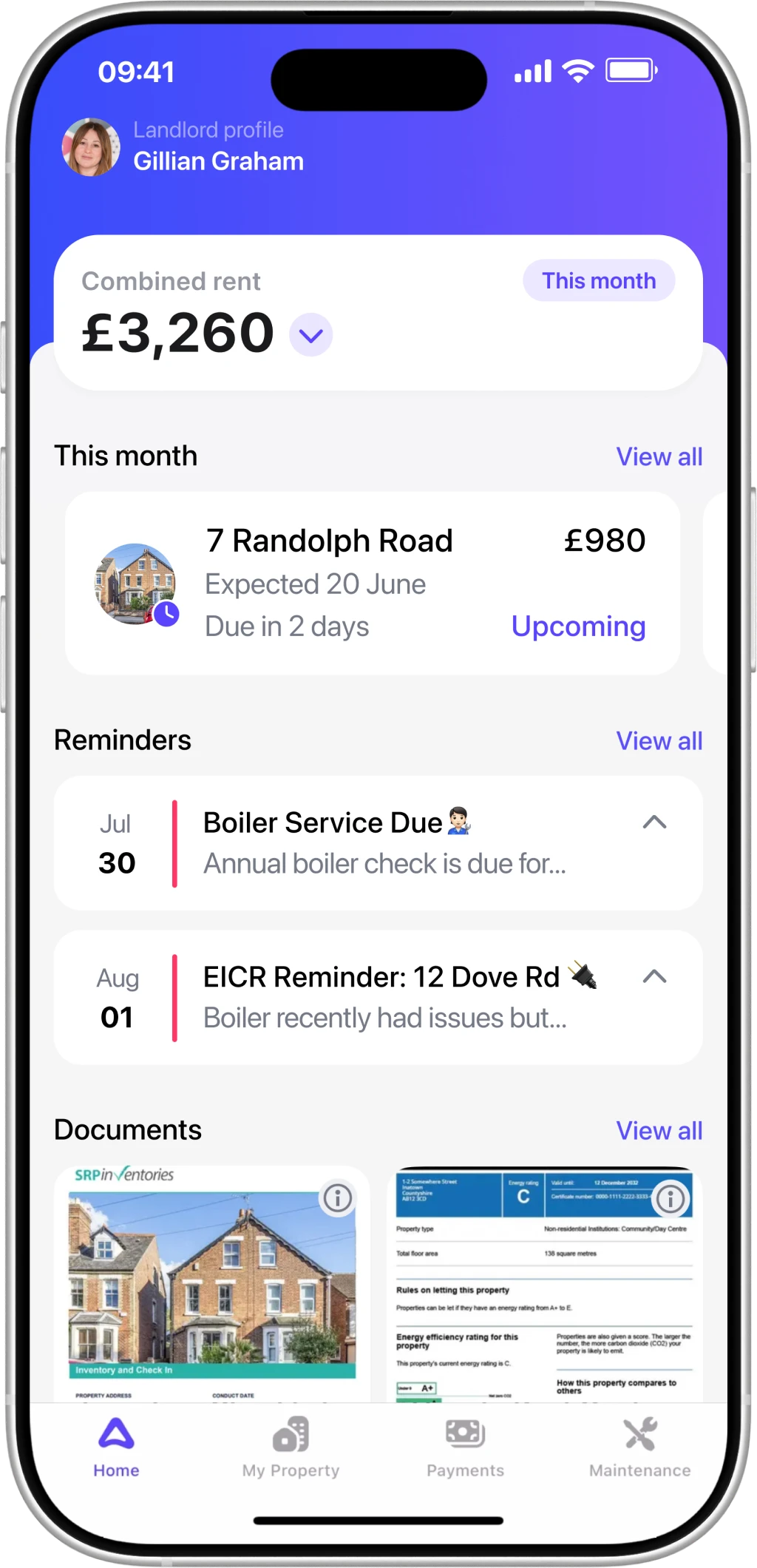



Your portfolio deserves better than a spreadsheet.
Join 3,000+ UK Landlords and Tenants who track compliance, collect rent, and manage all their properties from one dashboard.
No credit card required · Free for up to 2 tenancies · No commitment
Your portfolio deserves better than a spreadsheet.
Join 3,000+ UK Landlords and Tenants who track compliance, collect rent, and manage all their properties from one dashboard.
No credit card required · Free for up to 2 tenancies · No commitment
Your portfolio deserves better than a spreadsheet.
Join 3,000+ UK Landlords and Tenants who track compliance, collect rent, and manage all their properties from one dashboard.
No credit card required · Free for up to 2 tenancies · No commitment